
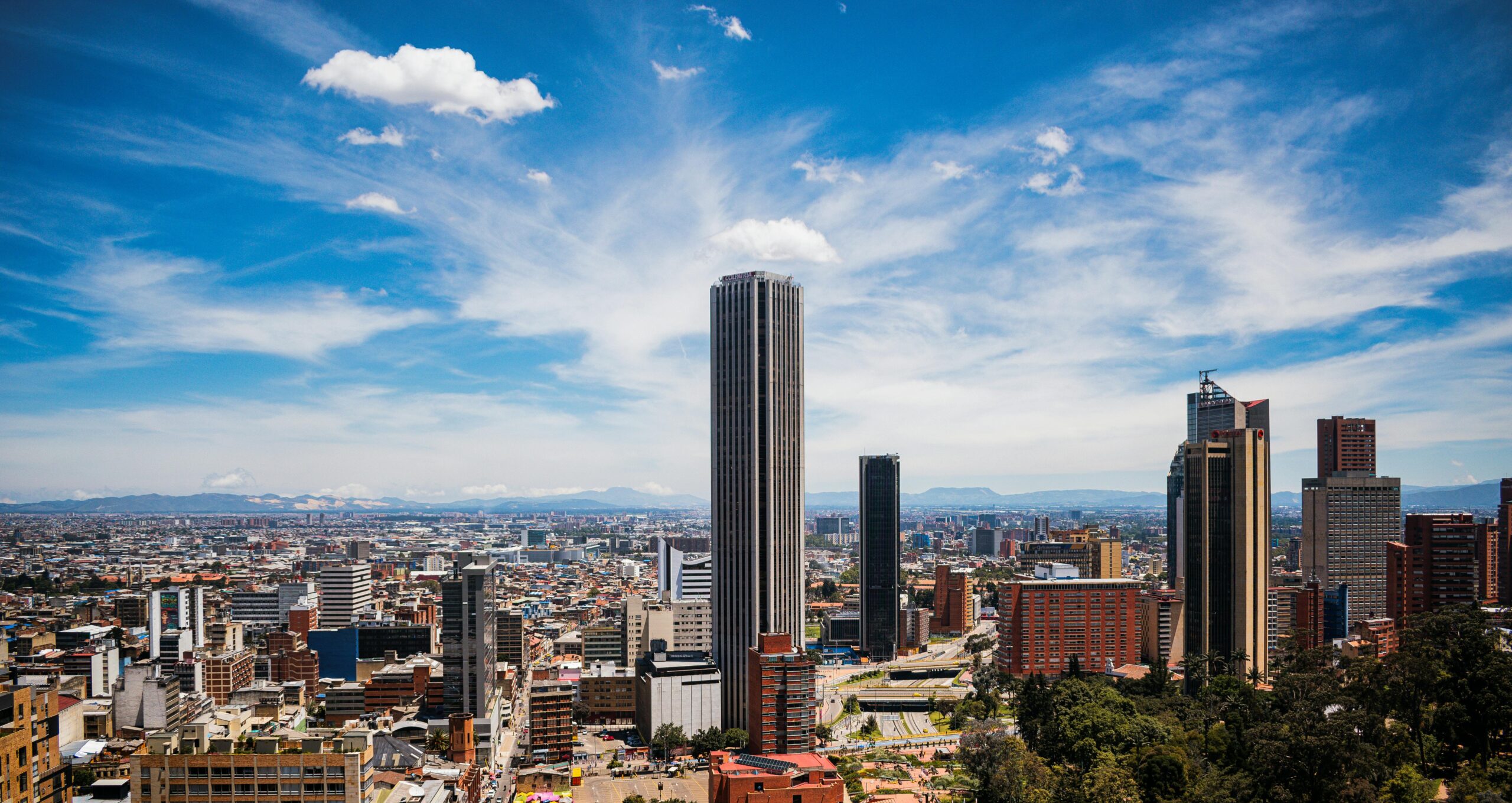
Colombian President Gustavo Petro meets with US President Donald Trump today, and with much of the conversation due to focus on shared concerns over security, what impact is this likely to have on exhibition organisers’ ambitions for local shows?
Security and political stability are expectations for any organiser hoping to build a sustainable international exhibition. Unpredictability in trade and travel arrangements complicates budgeting, vendor contracts and international attendee logistics, making events in high-risk markets less attractive.
So when Colombian Foreign Minister Rosa Yolanda Villavicencio confirmed that the US and Colombian leaders will discuss concerns over regional security, notably across the 2,200km border shared between Colombia and Venezuela, I couldn’t help wondering whether US foreign policy in Latin America will turn organisers away from the region.
Or did my colleagues in Bogota breathe a sigh of relief when Trump warned Colombian President Gustavo Petro to “watch his ass” in the hours that followed the US kidnap of President Nicolás Maduro in Venezuela?
Organisers quite reasonably fear doing business in a country portrayed by a global leader as being in thrall to cartels, and the world’s leading exporter of cocaine. But given Trump’s stated objective of removing corruption in Colombia to reduce the flow of drugs into the US, one benefit may be the creation of a safer place in which to do business long-term.
Put another way, some organisers may hear a door opening, where others hear one close.
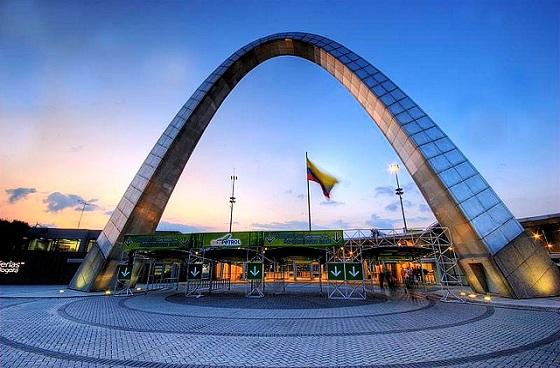
“In this industry, perception can move faster than reality,” my colleague in Bogota explained on the phone. “But today a new dynamic is taking shape, organisers are growing more comfortable. Yes, some organisers may react to a political crisis, but don’t forget, improving long-term stability is the goal here.”
It’s the same message being peddled by the Government’s investment and business events arm, Invest In Bogota, which attempted some damage limitation after the Maduro kidnapping by issuing a message of “calm and confidence” while it implements measures to guarantee the “safety, stability, and normal development of tourism activity in the country’s tourist destinations”.
It had to get ahead of organiser concerns, because Bogota competes regionally for international events with Lima, Sao Paolo and Panama, the latter of which is investing particularly heavily in incentives. The Colombian capital sees itself as distinct from these, and other Colombian cities such as second city Medellin, due to a strong public-private partnership involving the Chamber of Commerce and municipal administration. It alone accounts for 46.5 percent of Colombia’s FDI projects.
Another of my friends in Colombia asserts that rather than fracturing the relationship, Trump’s challenge to Petro is having the opposite effect, bringing them closer through unavoidable dialogue; a common refrain and one attributed correctly or incorrectly to Trump’s mercurial approach to foreign relations – and willingness to use military force to achieve his aims.
Whether that closeness is optional or not is another matter. In Trump’s own words, Petro has “been very nice over the last month or two, certainly critical before that, but somehow after the Venezuelan raid, he became very nice … changed his attitude”.
The success of this meeting carries extra weight this year in particular, with voters taking to the polls for the presidential elections in March. Regardless of their doubts about stability, many of those involved in tourism and investment in Colombia will wait for the outcome of the election before breaking out their wallets and stumping up.
Courting global organisers
The appetite from international organisers is clearly there. The last time I visited Bogota was in 2014 for UFI’s 81st Congress, which gathered 300 delegates from 46 countries. Its first Latin American president followed in 2015 when [venue] Corferias’ director Andrés López Valderrama took the ambassadorial role.
The association was there again last year, bringing 80 people to Bogota for a business mission and de facto FAM trip, while global meetings industry association SITE will be there one month after the March election for its three-day incentive summit, the first time in five years it has moved beyond Europe’s borders. It will be interesting to see what potential progress members find when they arrive.
Nonetheless, waving a conductor’s baton with an iron fist will have mixed results. The eventual impact of Trump’s interventionist approach to dealing with countries in Latin America is anyone’s guess.
Which shows will work in Colombia?
As can be seen from UFI and SITE’s attendance in Bogota, Colombia is keen to attract high-level corporate events and congresses that bring additional industries to Colombia, or promote international industry events.
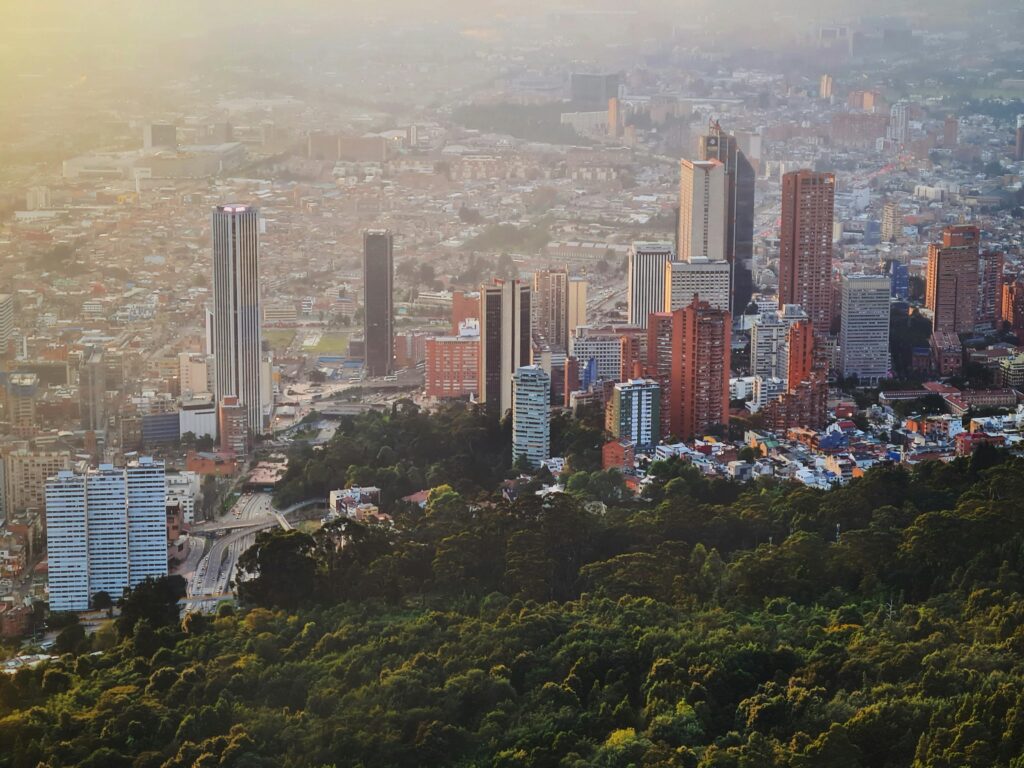
According to Invest in Bogota, Colombia will be of particular interest to any organisers with portfolios that include exhibitions in:
Life sciences and health
The digital economy (encryption, security etc)
Clean energy transfer and energy sustainability
Data centers, shared service hubs, and logistics centres
Retail and consumer goods, software and IT services
Software and IT services, and corporate services
Leave a Reply