

Would you invest in a service that was unable to retain two thirds of its customers every year?
This week my friend Stephanie Selesnick posted about our industry’s lamentable 30 percent retention rates 1 (drawing upon Ken Holsinger’s revelation at the PCMA Convening Leaders event) and I couldn’t help scratching my head.
“Our industry’s blended retention rate is barely above 30 percent. That means 70 percent of people aren’t coming back to events,” [Freeman’s] Holsinger said. “And we looked at data since 2008; this is not just last year’s data. We also looked at it in three-year rotations … the best and most generous data we could find puts it in the low 40s.”
I scratched my head because the piece I read immediately before this was Nineteen Chairman Phil Soar’s article in Exhibition News that events will be the only form of media in which a spending rise is expected in 2026 and 2027 2, according to a report from the Institute of Practitioners in Advertising (IPA). Specifically this will be a rise of six percent, while all others fall, as Phil clarified with the following excerpt from the report:
“Market research is predicted to see the largest fall in budgets (-17.4%), [followed by] General Marketing (-10.1%), Sales Promotions (-5.5%), Direct Marketing (-5.1%) and “Main Media” (-3.1%)”.
Come again? Businesses are only willing to increase their marketing spend in an industry which has – for almost two decades – seen the vast majority of customers decline to return after their initial experience?
How can both things be true?
In the ‘Overview of the Exhibition Industry’, the global exhibition association UFI makes the claim that:
“In a world of rising digital noise, exhibitions serve as a critical marketing and media platform by creating face-to-face gatherings that offer a sustainable, efficient and effective way to build trusted relationships across industries and borders.”
But as is made clear in Steph’s article, a 30 percent retention rate indicates customers see exhibitions as neither critical, nor effective, nor sustainable.
It’s also incredibly costly. Research by Frederick Reichheld of Bain & Company 3 (inventor of the ubiquitous Net Promoter Score) made it clear ages ago that increasing customer retention rates by just five percent increases profits by 25 to 95 percent.
Exhibitor retention requires activity

It’s difficult to find an accurate comparison in other industries, but to provide some examples, customer retention in the US automotive industry was 51 percent for the period of Oct 2024 – Sep 2025, according to S&P Global Mobility data 4. In the UK last year, mobile network providers retained almost four fifths of their customers (78.5%), while handset providers retained 70 percent of their customers despite high competition/price sensitivity.
But in these cases, inactivity on the part of the customer results in retention. In the case of rebooking, it does not.
It’s the reason another B2B enterprise, Software as a Service (SaaS), typically sees the highest retention of all industries at 90–95 percent. Annual contracts and deep software integration means, again, inactivity just defaults to auto-renewal.
The supermarket industry more accurately reflects our own, given that a supermarket – as with an exhibition – can be judged (depending on your stakeholding) by the quality of its exhibits and volume of visitors.
However, these are not the reasons most of us choose one supermarket over another. A shopper’s choice is overwhelmingly based on proximity, price, and to some extent (<30%) loyalty cards. Such comparison is largely pointless.
So, with retention figures in the exhibition industry as low as they are, what are the decision makers identified in the IPA report thinking? Perhaps Phil incorrectly assumed exhibitions account for a significant proportion of the events in which they wish to invest, and most respondents thought otherwise. But let’s assume he’s right and exhibitions are a key focus; how do we convert this interest in events into something long-term, and get those retention figures up from that meagre 30 percent?
Who’s running the show?
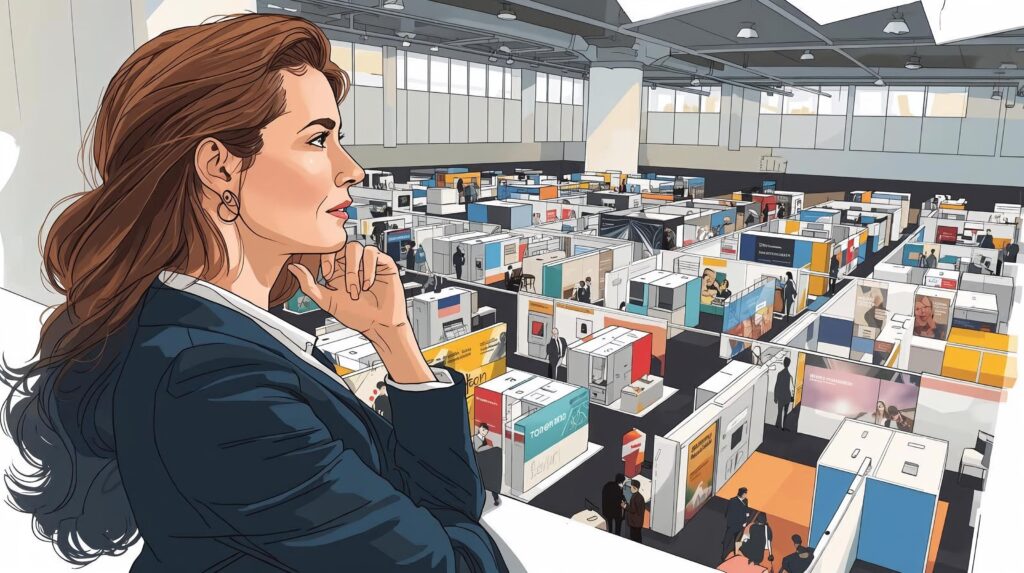
I think the IPA report highlights the importance of the event/portfolio director and their relationship with the community they serve – not that of the organiser. Their relationship is immeasurable and I think it is a significant factor in improving customer retention at our exhibitions.
Some of you in the UK may remember back to 2010 when Mark Moloney, the founder of the Professional Beauty Show, sold the show to Emap, signed a non-compete agreement, watched it expire, then bought the event back from Emap nine months after setting up a rival event in London 5. There are more recent examples, but this is a good example I knew first hand. Emap simply didn’t know the business like Mark did, and once his non-compete expired, the community he’d shepherded flocked back to him once again and Emap was left with an empty hall.
It’s the chef, not the restaurant, that determines the quality of the food.
It’s worth remembering at this point that the world’s largest organisers began life as publishers, and many B2B exhibitions grew from B2B magazines. Adverts became stands/booths while readers became visitors. And the tone, voice and ultimately the appeal of a magazine is determined by its editor – or in the case of an exhibition; the show director.
Nonetheless, in the hunt for attendance figures, square metres and website impressions, driven by ever-improving data collection, I think we as an industry began to put the cart before the horse.
The good news is that you don’t have to look far to see organisers scrambling to rekindle the missing creativity, that connection between the show director and the visitors they know by name.
Look at the emerging trend for smaller exhibitions in Germany, where the monolithic messen are pivoting (in the words of Wolfram Diener, president and chief executive officer of Messe Düsseldorf) “towards greater dynamism, storytelling and community engagement”, and in doing so creating space for the independents to bed in and form partnership with others in pursuit of growth.
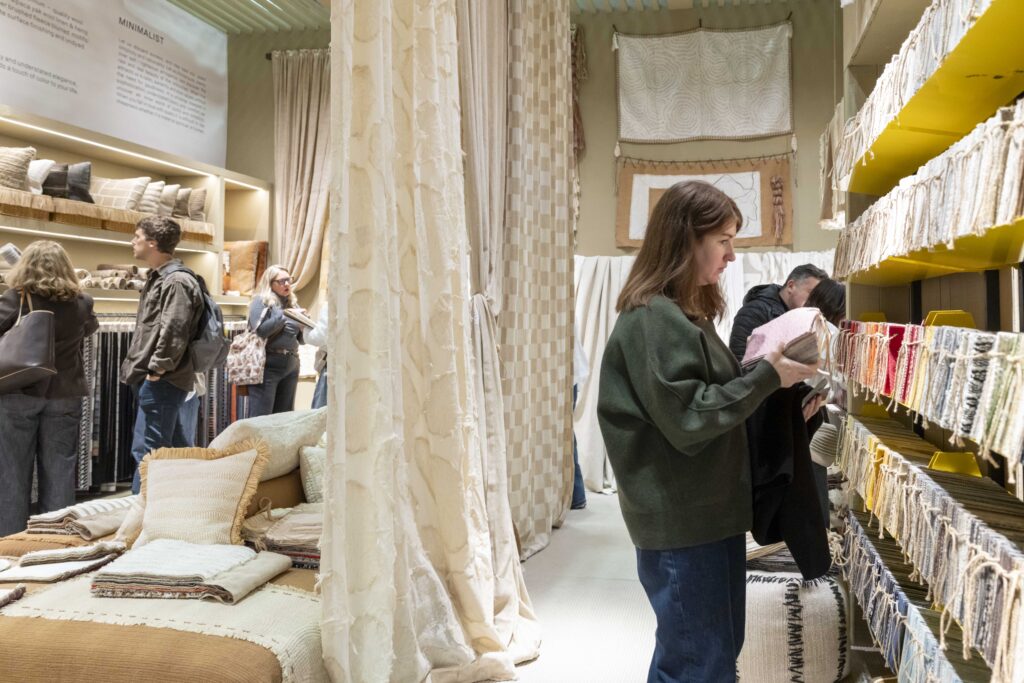
This is something we’ve seen recently in UK indie Strive Exhibitions’ commission for Hospitality Interiors Europe (HINT), to be held alongside Messe Frankfurt’s giant Heimtextil; innovative expertise that adds value to an event without placing the core proposition at risk.
In the words of Toby Walters, CEO and Founder of HINT, the event will focus on “the realities of hospitality design, specification and delivery”, adding “deep sector focus” and a “highly relevant environment” to Heimtextil’s global reach.
It will do so by placing magazine fundamentals front and centre; a content programme addressing hospitality trends and materials innovation, guest experiences and insight into future project development, as well as a series of activations for visitors on the show floor. Carefully considered, not paid-for tokenism.
Before leaving UFI, former MD Kai Hattendorf oversaw a logo rebrand that he pointed out, is the wing from Hermes’ helmet, in Kai’s words, “the Greek god of trade”. But for most, Hermes is better known as the gods’ emissary, the messenger for Zeus. And communication is everything. What is an exhibition if not a dialogue writ large, and in three dimensions.
As Francesca Golfetto from the Centre for Research on Markets and the Industrial Sector (CERMES) once told me, very few still attend events to transact, or find out what’s new in the marketplace – that is what the Internet is for. Success is driven by engagement, the stories told by visitors, reinforced by interaction with other individuals. In her view, organisers must:
“…emphasise the interaction of visitors with others who share their passion, and the perception of a general atmosphere, over a relationship with the supplier.”
Show directors are ultimately responsible for that general atmosphere, for inviting the interaction our exhibitors and visitors crave. Emotional connection trumps WiFi connection every time when it comes to creating lasting appeal.
If we want our customers to return, then it’s time to put the chefs back in charge of the kitchen.
References:
1. Selesnick, S, LinkedIn website article, Feb 17 2026, 30% Visitor Retention Rates are BAD. VERY. https://www.linkedin.com/pulse/30-visitor-retention-rates-bad-very-stephanie-selesnick-n8hxc/?trackingId=08V9duDwRCqDs0DhnPGNxg%3D%3D
2. Soar, P, Exhibition News website, Advertisers say that events are now their fastest growing sector, 23 Feb 2026, https://exhibitionnews.uk/advertisers-say-that-events-are-now-their-fastest-growing-sector/
3. S&P Global website, Driving success with customer loyalty in the automotive, 27 Feb 2026, industryhttps://internationalexhibitionreview.com/wp-admin/post.php?post=830&action=edit
4. Reichheld, F, Bain & Company website, Prescription for cutting costs, April 2014, https://media.bain.com/Images/BB_Prescription_cutting_costs.pdf
5. Reeve-Crook, A, Exhibition News website, February 2010, Emap sells Professional Beauty back to its founder https://exhibitionnews.uk/emap-sells-professional-beauty-back-to-its-founder/
Leave a Reply