
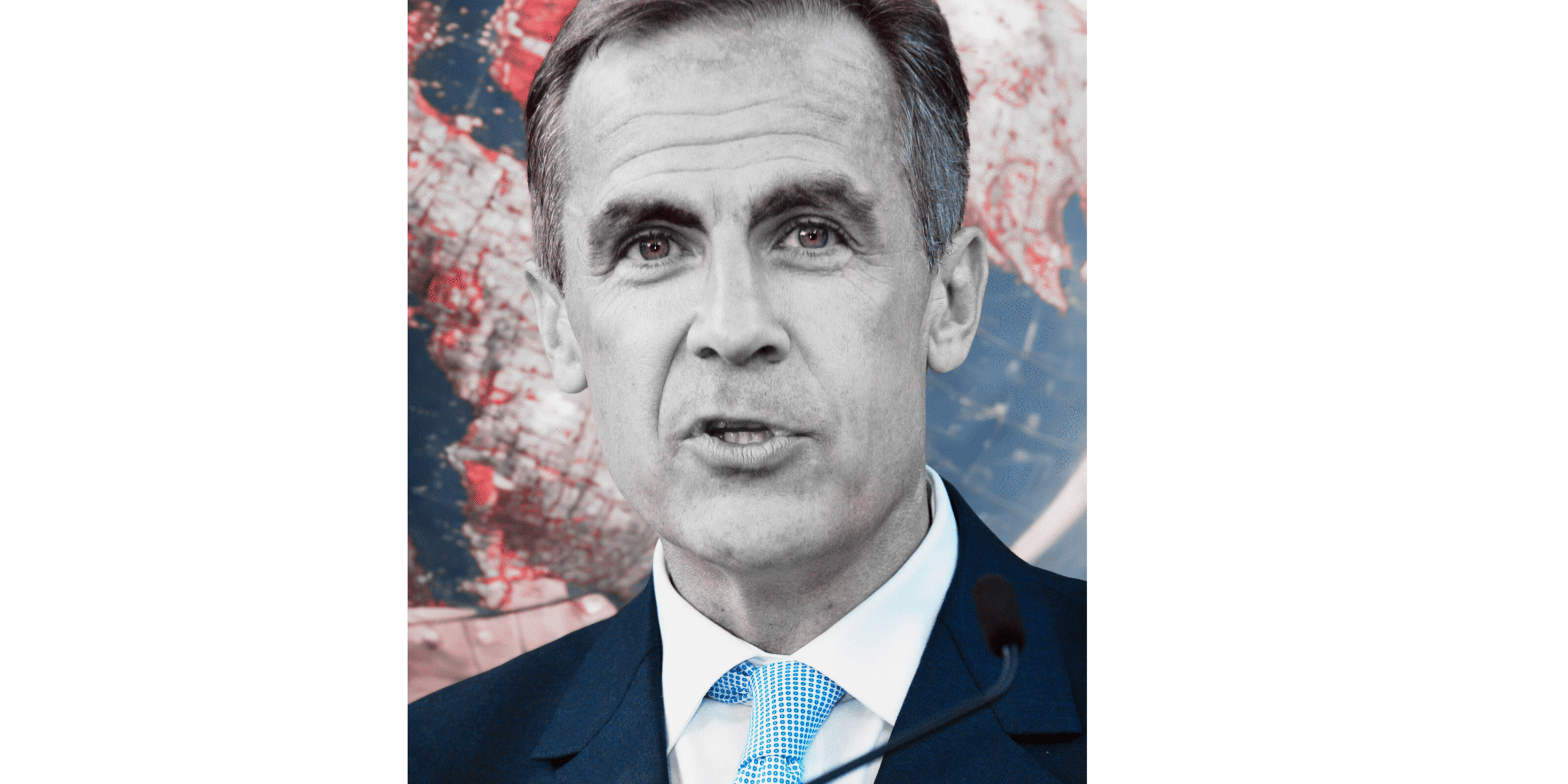
One of the most interesting things to come out of the World Economic Forum in Davos last week was Mark Carney’s assertion that the world’s middle powers must form trade alliances to protect themselves against the actions of unpredictable giants like the US.
“The middle powers must act together, because if we’re not at the table, we’re on the menu,” said the Canadian PM.
It’s a chilling comment, given the famous appetite of US president Donald Trump; his kidnap of Venezuela president Nicolás Maduro and subsequent claim on Greenland makes it clear we are all on the menu.
But like it or not, rethinking where and how the world’s most influential medium-sized economies source key goods and imports creates serious opportunity for international exhibition organisers.
Global supply chains were volatile enough before Trump began raising alarm bells with his penchant for tariffs and unashamed desire for hegemony. The rise of the right in elections across the world brings with it a playbook made clear by political slogans such as MAGA; a focus on nationalism, economic independence and withdrawal from international accords at which these Governments deem membership contrary to short-term competitive advantage.
Whether you lean left or right, the salient point is that this isn’t about politics, it’s about pragmatism.
The necessary response, Carney said, is for the middle powers to build coalitions that work, issue by issue, with partners that share sufficient common ground, creating “a dense web of connections” across trade investment culture on which we can draw for future challenges and opportunities.
“We are rapidly diversifying abroad. We’ve agreed a comprehensive strategic partnerships with the EU, including joining SAFE, the European defence procurement arrangements. We have signed 12 other trade and security deals on four continents in six months. In the past few days we’ve concluded new strategic partnerships with China and Qatar. We’re negotiating free trade pacts with India, ASEAN, Thailand Philippines and Mercosur.”
What is a Middle Power?

There is no clear definition of a middle power, even by the World Economic Forum’s own research. India is considered one despite qualifying on most grounds as a major power (and certainly in economic terms), while other countries included in this group only accrue middle power status by dint of punching above their weight in global affairs, such as Norway.
The WEF suggests a more accurate term could be ‘states with global influence’, although hard to measure.
The following are commonly accepted examples of middle powers:
Brazil
Indonesia
Saudi Arabia
UAE
Nigeria
Poland
Topping Carney’s agenda is a bridge between the transpacific partnership and the European Union, which he claims would create a trading bloc of 1.5 billion people. On critical minerals he’s forming buyers clubs, anchored in the G7, enabling economies of scale that facilitate the world’s diversification away from concentrated supply, as well as fast-tracking a trillion dollars of investments in energy, AI, critical minerals, new trade corridors and beyond.
“In a world of great power rivalry,” he continued, “the countries in between have a choice. Compete with each other for favour, or combine to create a third path with impact.”
As economic and diplomatic hubs, middle powers can drive investment and diplomatic initiatives, reshaping global economic and political landscapes. As they strive for agency, seeking greater status and a more representative global order, they challenge existing structures and engage with catalysts for competitive advantage.
Which is where the exhibition industry really delivers.
New trade corridors (Thailand’s Eastern Economic Corridor, for example 1 ) are not only geographic entities; conduits for regional and global trade designed to reduce transport times and costs, they also signal intention to export and import knowledge and value between the home market and those abroad.
And that economic exchange is brought about at some level by trade shows. Supranational partnerships and agreements are all well and good, but the flames of innovation won’t ever fan out into an inferno without shared discovery, knowledge transfer and human connection.
European middle power calling
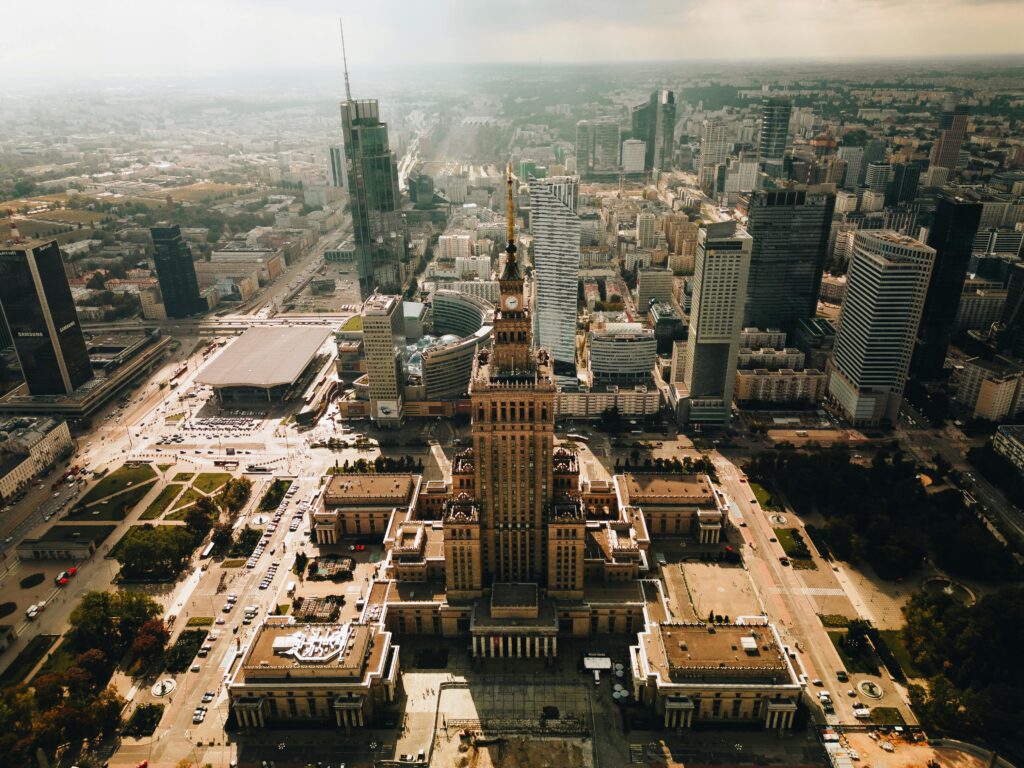
Take Poland for example. Given the war taking place just across its border, Poland is more keen than most to improve its self-sufficiency. The country needs strategic technology (such as advanced manufacturing components) and energy supply security as it transitions away from reliance on fossil fuels (the country was one of the EU’s largest importers of Russian LPG in 2023–2024).
But according to analysis by the Polish Economic Institute 2, Poland also has a critical requirement for biotechnology and specialised biotech products, and is dependent on others for advanced high-tech machinery in sectors like aerospace, defence and clean tech. Lessening this dependence requires domestic supply chains and greater diversity in the allies it can source such machinery from.
Any exhibitions able to help it achieve self-sufficiency or expand the number of potential suppliers will find a welcome home in the country.
| Category | Approx. Value (USD) |
| Machinery & computers | $47 Bn |
| Electrical & electronic equipment | $45 Bn |
| Vehicles & transport equipment | $40 Bn |
| Mineral fuels & oil | $29 Bn |
| Plastics & related products | $19 Bn |
| Pharmaceuticals | $14 Bn |
| Iron & steel | $12 Bn |
| Optical & medical instruments | $8 Bn |
Does this mark the end of globalisation? No, but to paraphrase Carney, we cannot live within the lie of mutual benefit through integration, when integration becomes the source of our subordination. The is one of pragmatism as much as a push-back against the economic and foreign policy of the United States. Canada is actively taking on the world, in Carney’s words, “as it is, not as we wish it to be”.
“Let me be direct,” said Carney. “We are in the midst of a rupture, not a transition. Over the past two decades, a series of crises in finance, health, energy and geopolitics have laid bare the risks of extreme global integration. But more recently great powers have begun using economic integration as weapons, tariffs as leverage, financial infrastructure as coercion, supply chains as vulnerabilities to be exploited.
“As a result, many countries have drawn the same conclusions. That they must develop greater strategic autonomy. In energy, food, critical minerals, in finance and supply chains … when the rules no longer protect you, you must protect yourself.”
The need for new supply chains will create a new world for international exhibition organisers, those with the capability to help markets in unproven territories open as these middle powers hedge against uncertainty.
Links and references
1. Website of the Thai Embassy in the US, Eastern Economic Corridor (EEC),(March 2023)
2. Website, Polish Economic Institute
3. World Integrated Trade Solution website, Poland Trade Summary 2023
(Original image of Mark Carney courtesy of Policy Exchange)
Leave a Reply