
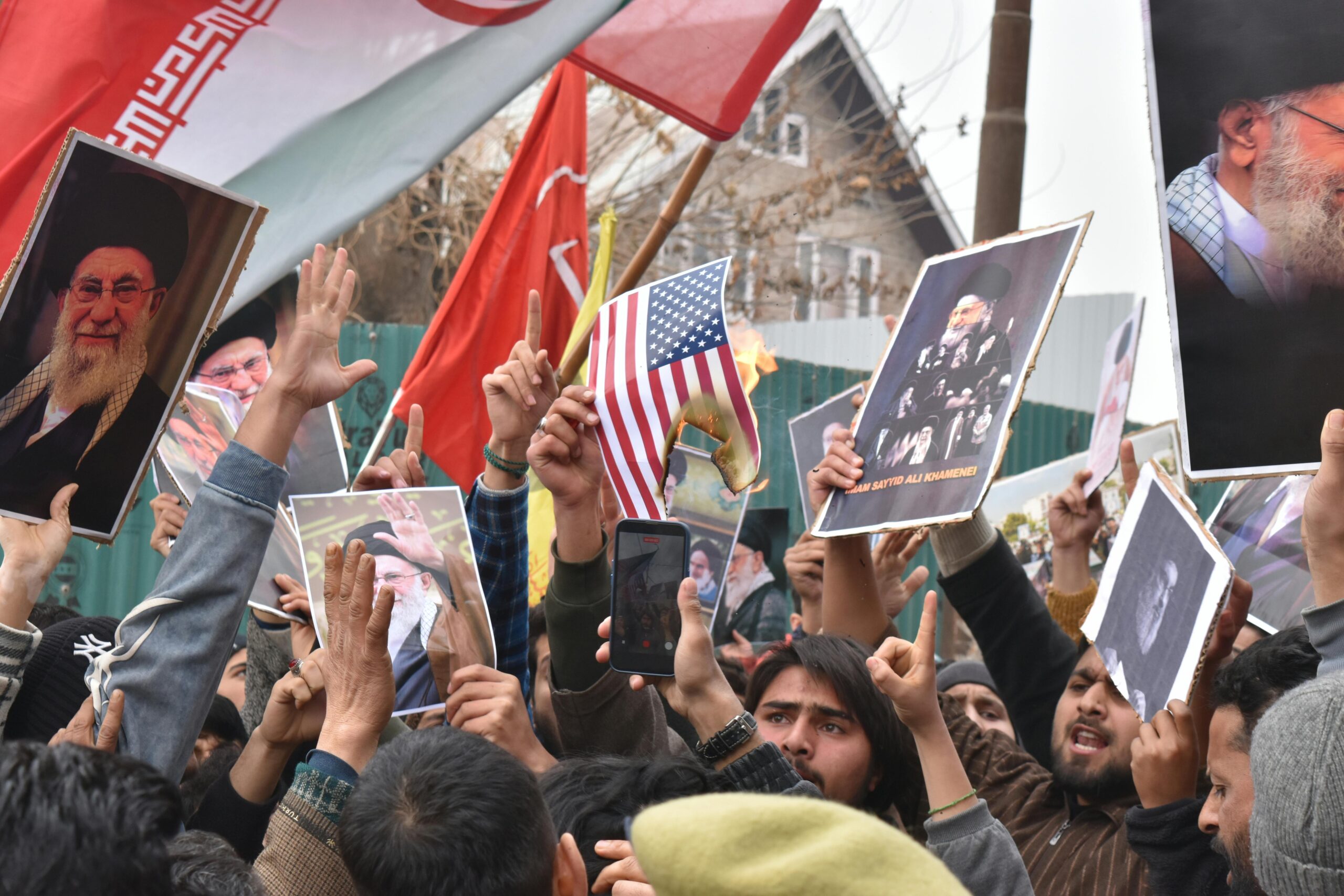
Whether the conflict runs for months or years, the Middle East’s reputation as a stable, affordable hub for exhibitions is under threat
In March 2020, as the UK Government announced it would lock its citizens indoors and impose extraordinary social limitations that still impact us to this day, I was busy collecting information for UFI.
It was, by then, obvious that the industry was entering a long chapter of closed doors, grounded flights and empty halls, but the association needed to document the ways in which organisers sought to mitigate the impact of COVID 19.
Even then, I remember thoughtful, reasonable people, arguing that exhibitions should receive some sort of dispensation, that measures could be taken to keep the doors open and lanyards looped around necks.
Like the apocryphal tale of King Canute railing against the tide, they argued that controlled interaction, masks and heat scanners would inhibit the spread of the virus.
But we knew then, as we know now, that if you set out to construct a way to assist the transmission of a global virus, you’d struggle to find a better model than an international exhibition.
These conversations, which continued for weeks, were moot of course. It didn’t matter what measures we took when our visitors were being told their attendance could result in an empty chair at the next family gathering.
Fast forward six years and another global event has destroyed the predictability, affordability and traveller confidence that underpins the global exhibition industry.
The duration of the Iran war matters enormously for the global exhibition industry. Put simply, the longer the conflict persists, the more structural (not just temporary) the damage becomes.
This is because, before the conflict, cities like Dubai and Abu Dhabi became exhibition powerhouses because they offered:
- A geographic midpoint between Europe, Asia, and Africa
- Major airline hubs (Emirates, Etihad) enabling easy global access
- Heavy government investment in exhibition infrastructure
- Stability.
Today, major Middle East events have been postponed, exhibitors have withdrawn, uncertainty is sending insurance costs skyrocketing and companies are questioning whether long-haul travel is worth it. As the weeks roll on, a real fear of flying into or near conflict zones is embedding in the people whose attendance we require.
The World Economic Forum rescheduled its April Global Collaboration and Growth Meeting in Jeddah, Saudi Arabia, reflecting ‘a commitment to convening the meeting under conditions that ensure its full strategic impact‘.
The sentiment was echoed by Informa CEO Stephen Carter, who told investors that postponement was necessary, but remains confident Informa will return to the market “with punch and with purpose“.
“The military activity is creating conflict and disruption, and in some instances some distress,” Lord Carter told investors, “but the fundamentals of what we are doing in that part of the world are strong and our market position is unique and our strength and ability to scale is unrivalled.”
For now, his focus is rightly on looking after the organisation’s customers, brands and people.
He has a job ahead of him. The descent into factionalism and resentment is all but guaranteed by the US and Israel’s course of action, no matter which side has your sympathies.
We’ve already seen public cafes bombed in an effort to assassinate senior military leaders, not to mention schools and hospitals. In a region rapidly spiralling into chaos, how far-fetched is it that we see a drone or missile plummet through the ceiling of a plenary hall? We’ve already seen armed factions target trade vessels in the Suez Canal and the Strait of Hormuz, what makes a trade centre any different?
Or a jet full of US exhibitors, for that matter. Remember, these are not only state-sanctioned attacks we’re witnessing and thousands have died in US and Israeli missile strikes in recent weeks. Safety warnings from aviation authorities and highly publicised incidents have already created a perception of risk that discourages both corporate and leisure travel.
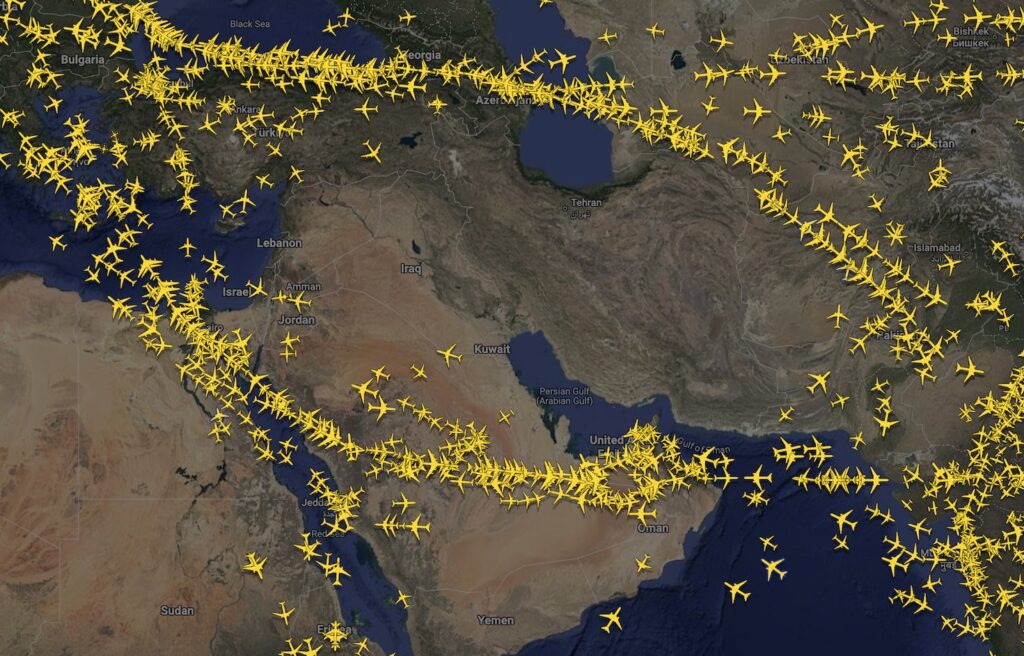
Most of us will remember the downing of Malaysia Airlines passenger flight MH17 over eastern Ukraine in July 2014, which the United Nations aviation agency held Russia responsible for. Would your exhibitors risk joining the 298 people on board that plane for a few business cards?
Many wouldn’t, and that’s the point. We have to look at this topic through the eyes of the exhibitor. Alternative global hubs such as Singapore, Frankfurt, London and Tokyo are already absorbing increased air traffic as airlines reroute away from the Middle East, and such relocation makes them more attractive to international event organisers. Accessibility is, after all, key to the success and sustained growth of an international exhibition.
I’m aware this may sounds like doomsaying, but there are parallels with a regional event of this magnitude and COVID-19; notably the risk arising from attendance. When the pandemic hit, our industry’s messaging often collapsed into the insular, weighed down by the decree of those who were ultimately accountable for its activity; our Governments. We sought to reassure our vanishing client base rather than pivot and accommodate them elsewhere, be that geographic or virtual. Platforms like LinkedIn morphed into echo chambers for victims, rather than places to spark ideas and share best practice. And it’s fair that they did; many, including me, stood to lose our livelihoods.
But today things are different; we have learned from the pandemic. We know what it means to be resilient and resourceful. We understand how to hybridise our events, how to speak to our customers and the rest of our event supply chain and, perhaps more importantly, we know which way inactivity leads.
What matters is that we get the messaging right for people we serve.
Maybe I’m Chicken Little, telling you that the sky is coming down when this is simply a falling acorn, but my point is that there’s no such thing as over-prepared. The language of my friends (and family) in the Middle East has changed in a way that was absent from discussion of previous events.
Middle East shows postponed since the start of the war

Bahrain and Saudi Arabia F1 races
Middle East Energy Dubai
Arabian Travel Market, Dubai
Abu Dhabi Business Week
Dubai International Boat Show
LEAP, Saudi Arabia
Art Dubai
What next?
If the war continues for just months, we’ll see a structural downturn that sees the industry begin to adapt rather than wait for recovery.
Extend the war’s timeline to years (a prospect that increases in likelihood with every new entrant to the conflict), and the Middle East largely disappears as a major exhibition hub. Its flagship events permanently relocate, international mega-events decline in favour of regional ones and places like Paris, Singapore, Frankfurt, Las Vegas and Chicago profit from the region’s loss.
Or perhaps Trump makes his big deal tomorrow and everyone just forgets about the misery of the past three months.
Either way, I suspect we’ll see one or all of the following actions emerge as a result of this conflict:
- Relocation to locations that offer stability, strong transport links and lower perceived risk, making them viable substitutes for events traditionally held in Gulf states.
- The region’s organisers will adopt hybrid and digital event models, combining smaller, regional physical exhibitions with virtual platforms to maintain global participation without requiring all attendees to travel. This approach, accelerated during the COVID-19 pandemic, is the ‘safe-mode’ for events in a context of geopolitical disruption but, nonetheless, a poor substitute.
- Regionalisation of events could become more prominent. Instead of hosting one large international exhibition, organisers can run multiple smaller, regionally focused but connected events. This reduces long-haul travel requirements and spreads risk across different markets.
- Enhanced risk communication and safety assurances, with clear messaging about security measures, travel advisories, and contingency planning can help rebuild confidence among attendees who may be hesitant to travel.
- Scheduling flexibility becomes critical. With flight routes and costs fluctuating rapidly, organisers are more susceptible to event postponement and the need to adjust event dates. All it takes is one Israeli missile or Iranian Shahed drone landing within a mile of a hotel frequented by exhibitors, and potential attendance is through the floor. Contingency plans to accommodate travel disruptions, including flexible booking policies and airline partnerships could help mitigate exhibitor uncertainty.
Sadly, regardless of the duration and scope of this ongoing war, the conflict in Iran once again highlights the vulnerability of the exhibitions industry to external shocks, and particularly those affecting regional stability and aviation.
The Middle East has historically offered significant advantages as a global meeting point, but these benefits are contingent on stability and accessibility, both of which are currently under threat.
The impact of the Iran war will endure. No matter the short-term outcome, we’ve witnessed a new type of asymmetric warfare with spillover into the surrounding region. Drones have been fired into Bahrain, Jordan, Kuwait, Qatar, Saudi Arabia, Cyprus and Turkey.
With no formalised Government in Iran with which to do business, the ideological underpinnings at stake and the gravitational pull of the conflict, the indicators point to escalation, not peace, in the short-to-medium term.
In this new environment, resilience, diversification, and innovation will be key to sustaining the future of global exhibition organisers in the region.
Leave a Reply