
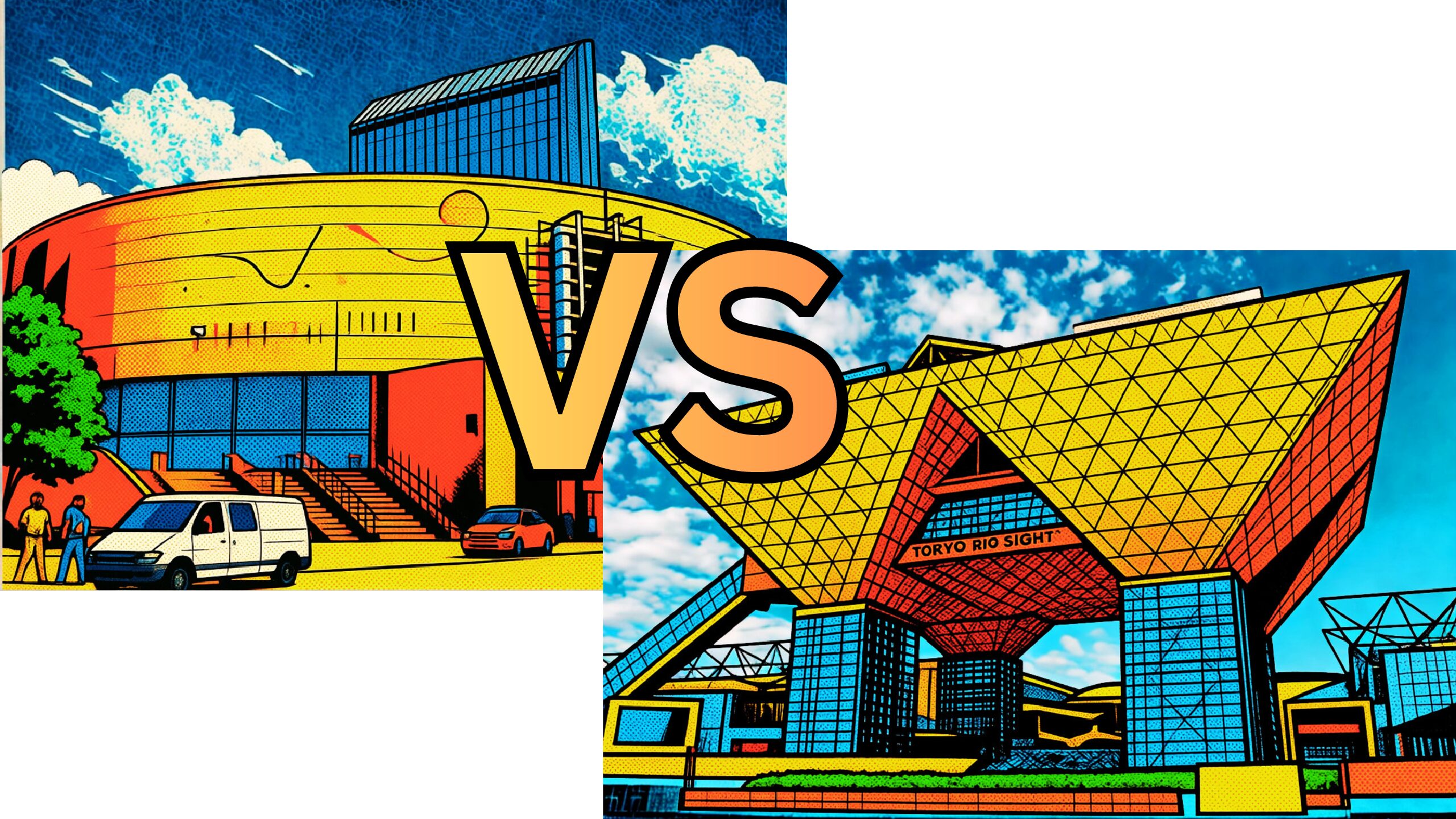
Every month, IER pitches two exhibition destinations into unwitting conflict. The battleground may be measured in square metres, bed nights and air carriers, but the contestants will be judged on their infrastructure, nightlife, scope for sustainable growth and ease of doing business.
So, ladies and gentlemen, grab your lanyards, fetch your notebook and take your seat!
This month Oslo, Norway’s plucky gateway to the Nordic countries, takes on APAC heavyweight Tokyo, as the two capitals jostle for exhibition superiority.
1. Economic and Market Considerations
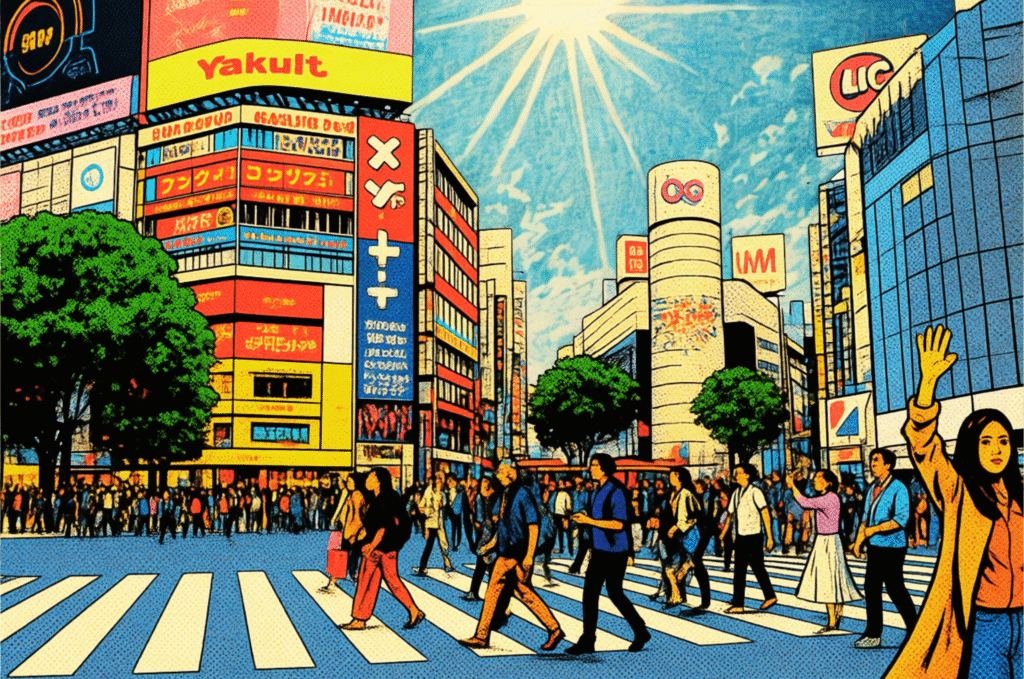
Tokyo, Japan’s bustling capital, is a global economic powerhouse, representing the world’s fourth-largest economy. It offers access to a large, affluent, domestic market and a gateway to the broader Asia-Pacific region. The city excels in technology, automotive manufacturing, robotics and sustainability initiatives, making it attractive for high-tech and industrial exhibitions. Its market scale allows organisers to reach millions of potential customers, suppliers, and business partners.
Oslo, by contrast, is smaller but highly affluent, with strong per-capita purchasing power and a focus on high-value industries such as maritime technology, renewable energy, fintech, and advanced digital services. While its domestic market is limited compared to that of the much-larger Tokyo, Oslo’s appeal lies in its positioning as a Nordic hub, allowing access to Scandinavia and northern Europe. For trade shows aligned with sustainability, green tech, and cutting-edge innovation, Oslo presents a highly receptive audience and a concentrated network of decision-makers.
2. Event Infrastructure
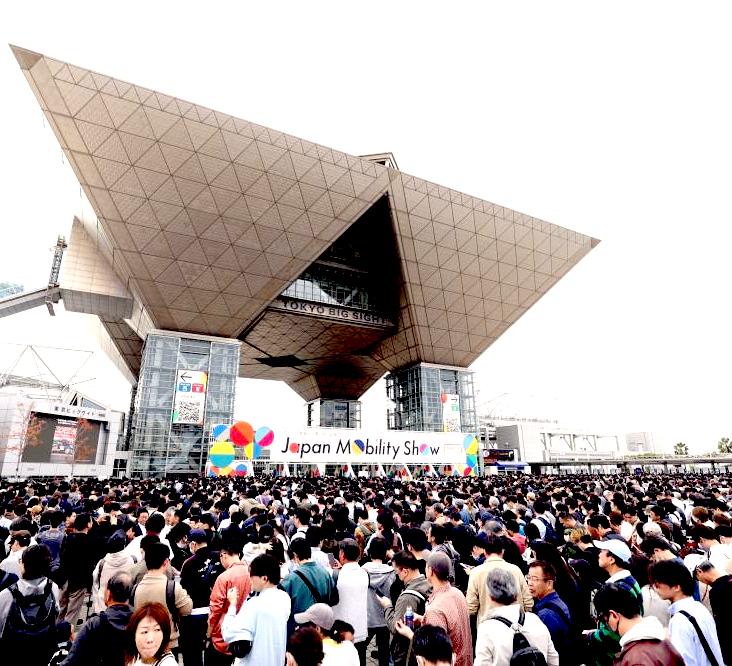
Tokyo’s flagship venue, Tokyo Big Sight, is Japan’s largest convention centre, with more than 115,000 square metres of exhibition space and 16 halls, located approximately 15 minutes from Haneda Airport and 30 minutes from central Tokyo. It is complemented by Makuhari Messe and Pacifico Yokohama, creating a wider metropolitan exhibition ecosystem.
The city’s airports, Haneda and Narita, offer global connectivity, while extensive public transport and hotels support large-scale events.
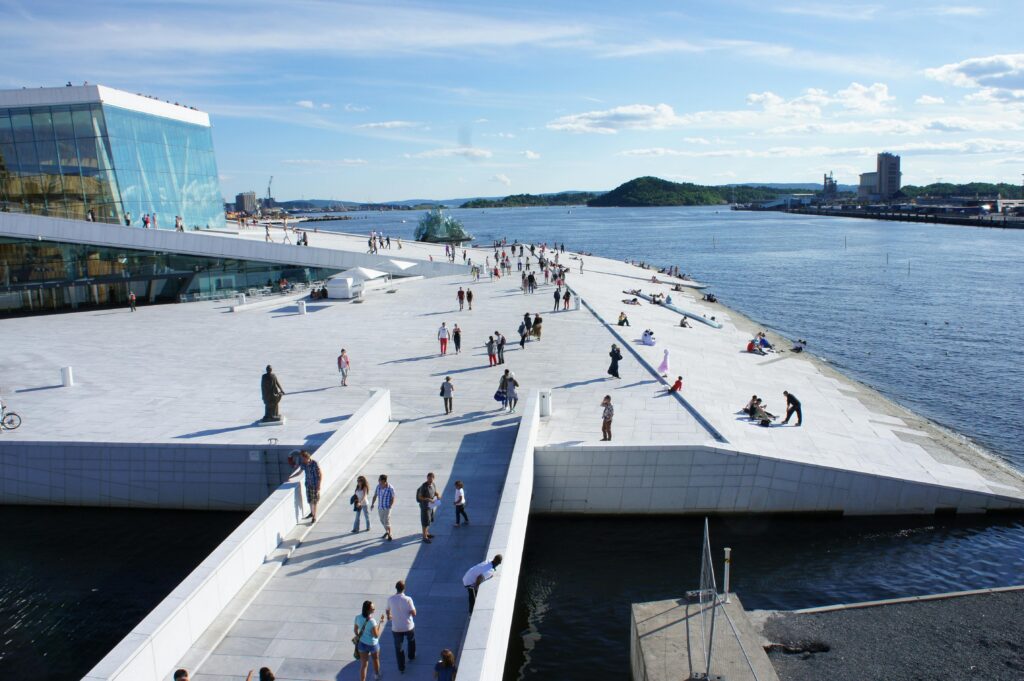
Oslo’s infrastructure is smaller in scale, but then it would be. The Oslo Spektrum, Telenor Arena and Oslofjord Convention Center provide modern exhibition facilities, supported by excellent airport connectivity through Oslo Gardermoen.
While Tokyo can host events for hundreds of thousands, Oslo is better suited for targeted, high-value exhibitions with an emphasis on quality over sheer scale.
3. Industrial and Innovation Focus

Oslo’s industrial strategy is narrower in scope but highly focused on high-growth sectors. Norway’s green transition, including offshore wind, electric mobility and carbon capture, positions Oslo as a hub for sustainability-focused trade shows. Additionally, the tech and specifically the fintech sectors are growing rapidly, supported by collaboration between universities, research institutions, and industry.
Exhibitions in Oslo often cater to niche, high-value sectors, often attracting a relatively high proportion of highly engaged professionals and decision-makers.
Tokyo’s industrial base is extensive, spanning electronics, automotive, precision machinery, robotics and, like Oslo, green technology. Japan’s commitment to R&D and innovation ensures a steady pipeline of advanced technologies and its international trade shows such as the Japan Mobility Show (formerly Tokyo Motor Show), the Japan International Machine Tool Fair (JIMTOF) reflect this.
The city also benefits from strong corporate investment in global expansion and innovation partnerships.
4. Talent and Academic Excellence
Both score highly here. Tokyo is home to globally ranked universities and technical institutes, producing a large pool of engineers, IT specialists, and researchers. Students are typically trained in areas such as robotics, AI, and industrial innovation, making Tokyo both a venue for showcasing new technologies and a source of skilled labour for exhibitors and companies.
Oslo, while smaller, has universities that focus heavily on sustainability, engineering, IT, and business. Students gain expertise in renewable energy, digital technologies, and entrepreneurship. This creates an ecosystem where trade shows can connect directly with research-led innovation and emerging talent in these key industries.
5. Ease of Doing Business

Tokyo benefits from a mature and sophisticated business environment, ranking 29th in the World Bank’s Ease of Doing Business Index. Its regulatory framework is stable but can be complex for foreign entrants due to language, administrative procedures, and local business culture. Costs of operation and logistics are high, which can affect profitability.
Oslo, on the other hand, consistently ranks in the top 10 globally for ease of doing business. Regulatory transparency, efficient permits, low corruption, and supportive government policies make it easier for new trade shows to launch and operate successfully.
Costs may still be high, but bureaucratic hurdles are fewer compared to Tokyo.
6. Strategic considerations for exhibition organisers

Tokyo offers scale, market size, and access to cutting-edge technology but requires careful planning, significant investment, and strong local partnerships. Organisers benefit from high potential attendance and international exposure but must manage complex logistics and regulatory processes.
Oslo provides a highly efficient, innovative, and sustainable environment. It is ideal for specialised, high-value trade shows targeting decision-makers in specific sectors. While the scale is smaller, the quality of participants and the focus on growth industries can make exhibitions more impactful and easier to manage.
In conclusion
In summary, Tokyo and Oslo represent contrasting opportunities. Tokyo excels in scale, global reach, and industry diversity, making it suitable for mass-market or technology-driven exhibitions. Oslo, while smaller, offers efficiency, strategic access to Nordic markets, and alignment with high-growth sectors such as sustainability and digital innovation. Trade show organisers should weigh the benefits of market size and international prestige in Tokyo against the quality, efficiency, and niche focus available in Oslo. The choice ultimately depends on the event’s objectives, target audience, and desired balance between scale and strategic impact.
| Factor | Tokyo | Oslo |
Market Size | Huge domestic market; gateway to Asia-Pacific | Smaller domestic market; gateway to Nordic countries |
Economic Strength | 4th largest economy globally; strong in tech, automotive, manufacturing | High per capita income; focused on green tech, maritime, fintech |
Event Infrastructure | Tokyo Big Sight, Makuhari Messe, Pacifico Yokohama; massive scale; excellent connectivity | Oslo Spektrum, Telenor Arena, Oslofjord Convention Center; modern, efficient, smaller scale |
Airports & Connectivity | Haneda and Narita; direct international flights; extensive public transport | Oslo Gardermoen; direct European connections; fast rail to city centre |
Industries & Innovation | Robotics, electronics, automotive, green tech; strong R&D ecosystem | Renewable energy, maritime tech, digital innovation, fintech; highly specialised |
Academic & Talent Pool | Large universities; engineering, IT, AI, robotics | Smaller universities; focus on sustainability, engineering, entrepreneurship, digital tech |
Ease of Doing Business | Ranked 29th globally; stable but bureaucratic; high operational costs | Top 10 globally; transparent, efficient, fewer bureaucratic hurdles |
Cost of Events | High: venues, staffing, logistics | Moderate to high: venues and staffing expensive but easier to navigate |
Audience Type | Broad, mass-market; global exposure | Niche, high-value, decision-maker focused |
Cultural & Networking Opportunities | Vibrant nightlife, entertainment, and international hospitality | Sophisticated cultural and dining experiences; smaller but high-quality networking |
Best For | Large-scale, high-profile international trade shows; tech and manufacturing | Targeted, high-value exhibitions; sustainability, maritime, fintech, innovation |
The Real Deal

A battle on exhibition grounds is one thing, but everyone is asking what exactly would happen if Oslo actually sent its population into conflict with Tokyo?
Population and manpower
With roughly 14 million residents in the city proper and about 37 million in the metro area, Tokyo dwarfs Oslo’s paltry 700,000 residents in the city and around 1.5 million in the metro area.
Even if every single person in Oslo somehow mobilised in anything ressembling an organised mass, they would be massively outnumbered by Tokyo’s population alone, let alone Japan’s national military capacity.
Military capability
Forget the fact that Japan doesn’t have a traditional offensive army due to its pacifist constitution, its military (known as the Self-Defence Force) is extremely well-equipped and the capital is heavily defended with air, naval, and ground capabilities.

Norway has a professional military of about 25,000 active personnel, with modern NATO-standard equipment, but few are to be found in Oslo’s civilian population. Even if they could find some control of the airspace to drop their dreaded Rotfisk, team Oslo would have a hard time setting about their Japanese counterparts.
A civilian invasion from Oslo without military hardware would be peanuts against the pyramids: utterly ineffective against Tokyo’s modern defenses.
Logistics and geography
Separated by nearly 8,700 km of ocean, Oslo would have its work cut out projecting force across multiple countries and the Pacific to reach Tokyo. Moving even a small fraction of its residents across that distance is logistically impossible without enormous naval and air transport; far beyond Oslo’s capacity.
Tokyo; coastal and easily resupplied would be defending itself against very tired foreign forces’ a much simpler task than launching a cross-ocean invasion.
The Verdict
Even if imagined purely as a civilian ‘everyone fights’ scenario with no weapons, Oslo’s population would be physically dwarfed, and Tokyo’s infrastructure and numbers would shine through. Imagined as a fully militarised all-out war, Norway simply does not have the military power or global reach to threaten Japan.
Tokyo, exhibition hotspot and Asia-Pacific gateway, would overwhelmingly win in any realistic or semi-realistic total war scenario. The sheer difference in population, military capability, and geography makes an Oslo invasion unthinkable outside of pure fantasy.
Leave a Reply